Dog hair collects in places that are easy to overlook: the edge of a rug, the gap beside a sofa and the route from a favourite resting spot to the door. A useful clean-up routine follows those collection points. It does not depend on one tool working on every material. Start with the surfaces you have, then choose a method that the surface's care instructions allow.
Map where the fur is collecting
Look at a normal day before reorganising the house. Identify the resting spot, the path through the room and any fabric that is difficult to clean. A washable cover may make maintenance simpler if it is suitable for the furniture, but it does not remove the need to clean beneath it. Keep a short list of priority surfaces. Dealing with the areas where fur gathers most visibly is usually easier to sustain than attempting the same detailed clean of every corner each time.
Work from loose items to fixed surfaces
Remove washable throws or covers carefully so you do not scatter collected hair through the room. Follow their care labels and clean loose fur from suitable surfaces before washing where appropriate. Next address furniture and finally the floor, using methods compatible with each material. This order helps avoid putting hair back onto an area you have just cleaned. Empty or clean the tool as it collects fur; continuing with a loaded working surface can make the task less effective.
Test a manual hair remover first
A reusable broom or handheld remover can be convenient, but compatibility cannot be assumed from a general carpet or fabric label. Test light strokes in an inconspicuous area and inspect for pulled fibres, altered texture or marks. Stop if the surface changes. Avoid increasing pressure to compensate for a poor result. For delicate upholstery, use the furniture maker's guidance or ask a cleaner before trying an unfamiliar tool. The correct response to an unsuitable surface is a different method, not more force.
Keep grooming separate from floor cleaning
Grooming tools and household hair removers have different intended uses. A broom with a pet-hair label belongs on approved household surfaces, never on your dog. Store it separately from brushes and gloves used for coat care. A regular appropriate grooming routine can help you manage loose coat, but no brush guarantees a home without fur. If shedding changes suddenly or is accompanied by skin concerns, seek veterinary advice rather than trying more aggressive brushing or household cleaning equipment.
Create a reset point for the cleaning kit
Choose a storage spot where tools can dry and collected hair can be discarded easily. Clear the working surface after use, inspect it for damage and follow its cleaning directions. If different people clean the home, label tools by intended use. Keep a clean towel available for damp paws and coat after outings, but separate used towels from clean supplies. A straightforward reset makes the next clean less of a project and reduces the temptation to use whichever tool happens to be nearby.
Judge the routine by effort as well as appearance
After trying your plan, ask which step took the most effort and whether the result lasted through normal use. You might need a different cover arrangement or a smaller clean of one high-use area between larger cleans. Avoid setting an impossible goal of removing every hair at all times. A useful routine is one that suits the surface, protects the material and can be repeated without excessive work. Compare accessories against that practical goal rather than a dramatic before-and-after promise.
Relevant PawNest products: specifications to compare
The following comparison uses the current product information, not hands-on test results or a ranking. Choose by the task, size and care requirements. A related accessory is useful only when its intended use fits your routine.
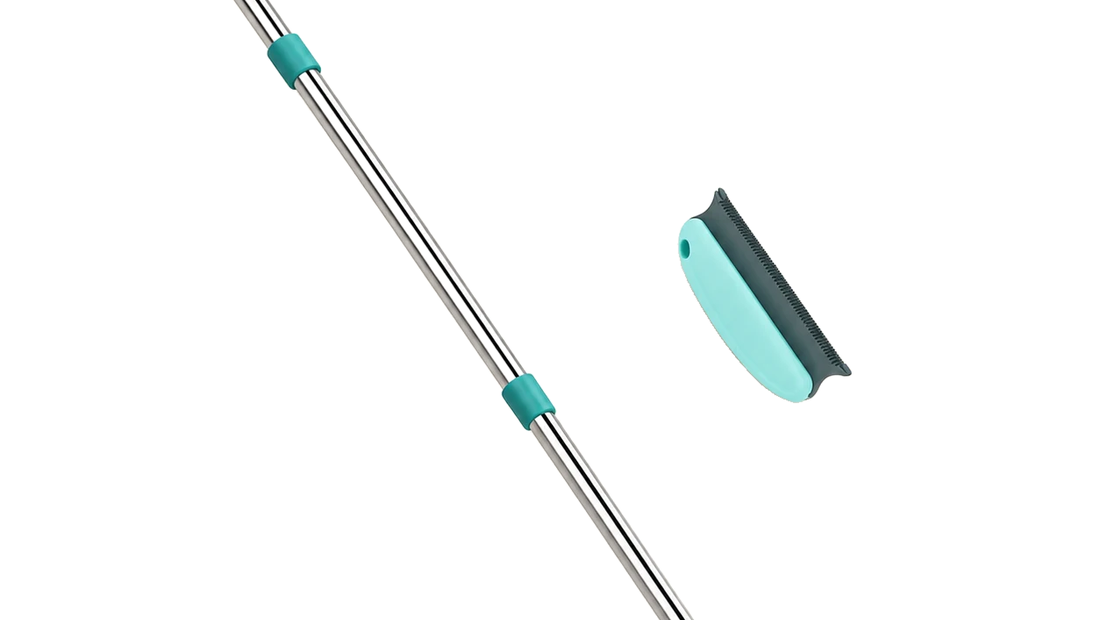
Reusable Pet Hair Remover Broom
Tackle loose pet hair as part of your regular floor clean. This manual broom gives you a long handle for larger areas, with a small handheld tool for closer work. It is reusable and needs no batteries or adhesive refills.
- Long handle for floor cleaning
- Small handheld hair remover included
- Manual operation with no refills
Check before choosing: Dog and cat households removing loose fur from compatible floors and carpet. Test delicate surfaces in an inconspicuous spot first.
Pack contents: 1 pet hair remover broom and 1 small handheld hair remover, as pictured.
Comfort-Grip Pet Deshedding Brush
Make loose-coat grooming part of a calm everyday routine. This handheld brush combines a broad head with a shaped grip, giving you a simple manual tool for short, gentle brushing sessions.
- Broad head with rows of comb teeth
- Shaped handle with hanging hole
- Manual grooming without batteries
Check before choosing: Dog and cat owners introducing gentle loose-coat grooming. Check that the comb teeth suit your pet's coat and avoid pulling through tangles.
Pack contents: 1 pet deshedding brush with ABS body.
Pet Drying Towel with Hand Pockets – 100 × 50 cm
Keep a drying towel handy for baths and damp walks. This microfibre towel includes hand pockets to help you hold it while patting your pet dry, with bound edges and a paw detail.
- Microfibre drying fabric
- Hand pockets for easier handling
- 100 × 50 cm towel
Check before choosing: Dog and cat owners who need a towel for baths or damp walks. Compare the 100 × 50 cm towel with your pet; larger coats may need more than one towel.
Pack contents: 1 grey pet drying towel with hand pockets, approximately 100 × 50 cm. The supplied imagery shows a blue-grey tone.
Browse the pet grooming and cleaning supplies collection to compare available options. Keep the product’s stated use separate from the broader advice in this guide; an accessory does not establish suitability for every pet.
FAQ
Can the pet hair broom be used on a dog?
No. It is a household cleaning accessory for compatible surfaces. Use a grooming tool intended for your pet and suitable for the coat.
Can a reusable remover be used on every sofa?
No. Upholstery varies. Follow the furniture care guidance and test gently in a hidden area; stop if fibres pull or the texture changes.