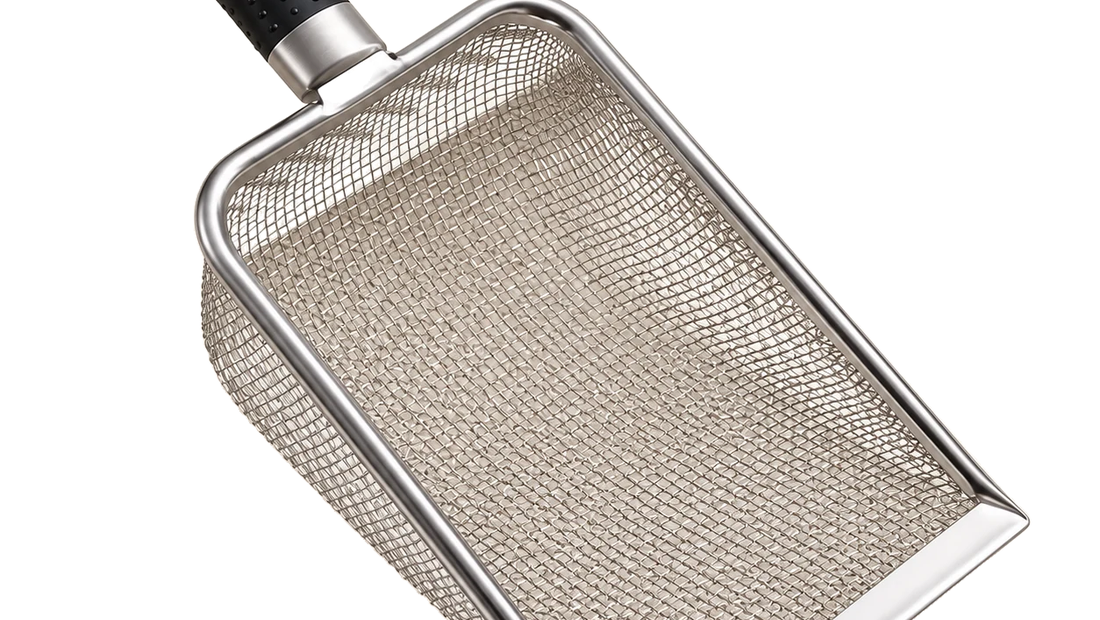
A litter scoop should match the litter you use and the way you reach the tray. Fine mesh is useful only when the clean granules can pass through it appropriately. Handle length and grip matter only if they let you scoop without awkward movements. Start with the existing tray and litter, then compare the tool's shape rather than assuming every scoop works equally well.
Compare mesh with the granules
Look at the size and form of the litter, including whether it is intended to clump. A fine-mesh scoop may retain material that a wider opening would release. That can be helpful or inconvenient depending on the litter. Check the manufacturer's information for both products where available. Do not assume that the word stainless steel determines sifting performance; the mesh itself is the relevant feature. If you change litter later, reassess the scoop rather than assuming the old combination still makes sense.
Consider the front edge and tray shape
A straight front edge can be convenient for lifting from a compatible tray surface, but avoid scraping aggressively or damaging the tray. Rounded corners and deep sides affect how easily you can reach material. Consider whether the scoop fits through a covered tray's opening and whether you have room to use the handle. The product dimensions and the tray layout matter more than the appearance of an isolated product image. Keep the movement controlled rather than using force to compensate for poor access.
Set up the disposal step before scooping
Have the appropriate waste container or disposal supplies ready so you are not carrying a loaded scoop across the room. Lift material gently and allow suitable loose granules to sift through. Follow your litter's disposal guidance and local waste instructions; do not assume litter can be flushed. Keep the process separate from feeding preparation and wash hands afterwards. An efficient setup is mainly about placing the necessary items within reach, not about rushing through tray maintenance.
Give the scoop a clean storage place
Do not place a used scoop on a feeding surface or leave it where it can contaminate clean supplies. Choose a holder or storage spot that can itself be cleaned. Remove residue from the scoop and follow its care instructions. A metal tool still needs inspection around the mesh, handle and joins. Look for damage or areas that are difficult to clean. If several people maintain the tray, keep the storage position obvious so the tool is returned to the same place.
Pair tray care with a floor check
A scoop deals with material in the tray, while a mat deals with some granules outside it. Neither replaces the other. Check the floor and mat during the routine so trapped litter does not accumulate unnoticed. Empty a double-layer mat according to its directions and allow it to dry after washing. Avoid choosing a mat solely to compensate for an awkward tray location. The whole area should remain easy for the cat to use and for you to maintain.
Evaluate the combination after a few uses
Notice whether clean litter is passing through as expected, whether you can reach the tray comfortably and whether cleaning the scoop is straightforward. If the tool regularly retains too much material, compare the mesh and litter rather than pushing harder. If access is the problem, review the placement or tray design. A suitable tool is one that fits the actual routine. The examples below separate the scoop's job from the optional surrounding mats so you can choose the parts you need.
Relevant PawNest products: specifications to compare
The following comparison uses the current product information, not hands-on test results or a ranking. Choose by the task, size and care requirements. A related accessory is useful only when its intended use fits your routine.
Stainless Steel Cat Litter Scoop
Make daily litter-tray tidying straightforward. The rectangular fine-mesh scoop lets suitable clean litter sift through while you lift clumps, with a long handle and grip band for controlled scooping.
- Fine stainless steel mesh
- Straight front edge for scooping
- Handle with grip band
Check before choosing: Indoor cat owners using litter that can pass through fine mesh. Check granule size before choosing a scoop.
Pack contents: 1 silver stainless steel cat litter scoop.
Double-Layer Cat Litter Mat – 30 cm
Create a simple landing spot outside the litter tray. The honeycomb surface catches loose granules as your cat steps out, and the two-layer design makes it easier to collect and tip them away.
- Honeycomb litter-catching surface
- Two layers for convenient emptying
- Compact 30 × 30 cm footprint
Check before choosing: Indoor cat owners with a compact space beside a litter tray. Check that the 30 × 30 cm footprint covers where your cat steps out.
Pack contents: 1 double-layer EVA cat litter mat, approximately 30 × 30 cm.
Compact Double-Layer Cat Litter Mats – 3 Pack
Give scattered litter a place to collect before it spreads around the room. These compact mats use a honeycomb top layer to catch granules, with a second layer underneath for emptying. The three-pack suits more than one litter area or a wider arrangement.
- Honeycomb top catches loose litter
- Double-layer construction for emptying
- Three compact mats per pack
Check before choosing: Indoor cat households organising more than one litter area or arranging several compact mats around an exit.
Pack contents: 3 compact double-layer cat litter mats, approximately 30 × 30 cm each.
Browse the pet grooming and cleaning supplies collection to compare available options. Keep the product’s stated use separate from the broader advice in this guide; an accessory does not establish suitability for every pet.
FAQ
Does fine mesh work with every cat litter?
No. Sifting depends on granule size and litter type. Compare your litter with the scoop mesh and follow the litter maker’s guidance.
Can a litter mat replace scooping?
No. A mat catches some granules outside the tray. The tray itself still needs an appropriate cleaning routine.