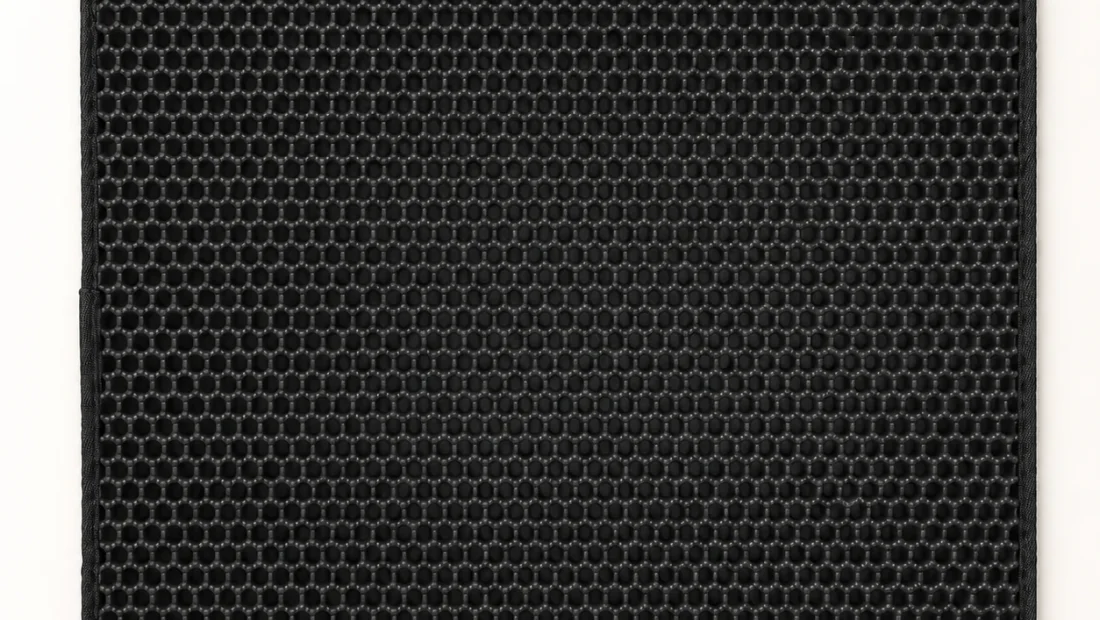
A litter mat works best as part of the tray layout rather than as an isolated purchase. Watch where your cat actually steps out, where granules land and how you reach the area to clean it. A compact mat in the right position may be useful, while a larger or poorly placed mat can be inconvenient. The aim is a practical landing area that your cat can use comfortably.
Observe the exit route first
Look at several ordinary exits instead of judging from a single visit. Does your cat step straight ahead, turn to one side or jump beyond the proposed mat position? Note furniture legs, doors and narrow passages that influence the route. Do not create a difficult approach to force the cat across a mat. If the litter area itself is causing problems, review the wider setup with appropriate advice. A mat is an accessory for scattered litter, not a solution to every toileting concern.
Measure the usable floor space
Measure the clear area rather than the room as a whole. Include the swing of nearby doors and the space you need to reach the tray. The compact examples below are approximately 30 × 30 cm each, so compare that footprint with the actual landing spot. Marking the dimensions on paper can help you picture the arrangement before purchase. Avoid assuming a product photo establishes scale, especially when the image includes a tray or cat that may not match your own.
Choose one mat or a small arrangement
A multi-pack can cover separate litter areas or allow a wider arrangement, but check that the mats lie flat and do not create awkward overlapping edges. More pieces also mean more items to lift, empty and dry. Consider whether you can clean the floor beneath them without moving half the room. If the cat avoids the texture or changes the exit route, reassess placement. The goal is a usable layout, not covering every surrounding surface regardless of your cat's response.
Empty before litter spreads again
Check the mat during routine tray care and empty trapped granules before they accumulate. For a two-layer design, follow the product instructions to separate and empty the layers. Dispose of litter appropriately and avoid carrying a loaded mat across the home unnecessarily. Clean the floor beneath it as well. A mat can catch loose granules, but it does not remove the need to maintain the tray or address other mess. Keep the emptying process straightforward enough that it is likely to happen consistently.
Allow the mat to dry fully
Use the cleaning method specified for the item and rinse away residue. Dry both the mat and the floor before replacing it. A compact spare may help maintain the layout while another dries, but only if you actually have storage and cleaning space for it. Keep litter equipment separate from food-contact accessories. Inspect the mat for damage or edges that no longer sit flat. Replace or adjust items when their condition interferes with the layout or makes cleaning difficult.
Recheck the setup when something changes
A new tray, moved furniture or a different litter can change where granules collect. Review the layout after these changes rather than assuming the original position remains useful. If your cat shows a new toileting problem, discomfort or persistent avoidance, seek appropriate veterinary advice instead of treating the mat as the cause or cure. Use the catalogue comparison to understand footprint and pack quantity, then choose around your actual tray area and the cleaning routine you can maintain.
Relevant PawNest products: specifications to compare
The following comparison uses the current product information, not hands-on test results or a ranking. Choose by the task, size and care requirements. A related accessory is useful only when its intended use fits your routine.
Double-Layer Cat Litter Mat – 30 cm
Create a simple landing spot outside the litter tray. The honeycomb surface catches loose granules as your cat steps out, and the two-layer design makes it easier to collect and tip them away.
- Honeycomb litter-catching surface
- Two layers for convenient emptying
- Compact 30 × 30 cm footprint
Check before choosing: Indoor cat owners with a compact space beside a litter tray. Check that the 30 × 30 cm footprint covers where your cat steps out.
Pack contents: 1 double-layer EVA cat litter mat, approximately 30 × 30 cm.
Compact Double-Layer Cat Litter Mats – 3 Pack
Give scattered litter a place to collect before it spreads around the room. These compact mats use a honeycomb top layer to catch granules, with a second layer underneath for emptying. The three-pack suits more than one litter area or a wider arrangement.
- Honeycomb top catches loose litter
- Double-layer construction for emptying
- Three compact mats per pack
Check before choosing: Indoor cat households organising more than one litter area or arranging several compact mats around an exit.
Pack contents: 3 compact double-layer cat litter mats, approximately 30 × 30 cm each.
Stainless Steel Cat Litter Scoop
Make daily litter-tray tidying straightforward. The rectangular fine-mesh scoop lets suitable clean litter sift through while you lift clumps, with a long handle and grip band for controlled scooping.
- Fine stainless steel mesh
- Straight front edge for scooping
- Handle with grip band
Check before choosing: Indoor cat owners using litter that can pass through fine mesh. Check granule size before choosing a scoop.
Pack contents: 1 silver stainless steel cat litter scoop.
Browse the pet grooming and cleaning supplies collection to compare available options. Keep the product’s stated use separate from the broader advice in this guide; an accessory does not establish suitability for every pet.
FAQ
Will a mat stop all litter tracking?
Do not expect complete elimination. Results depend on litter, placement and how your cat exits. The mat catches some loose granules and still needs regular emptying.
Does the three-pack contain larger mats?
No. The listed pack contains three compact mats approximately 30 × 30 cm each. Compare the total arrangement with the available floor space.