Food activities can offer a different way to present a small amount of suitable food, but the accessory should not make feeding confusing or inaccessible. Begin simply and supervise. This guide compares how to introduce different formats without claiming that a feeder treats anxiety, guarantees slower eating or suits every dog and cat.
Choose the food before filling the accessory
Use food appropriate for your pet and keep the amount within the relevant feeding plan. A product with many folds or grooves does not need every space filled. Check whether the accessory is intended for dry pieces or another food texture. A snuffle mat and a rotating wet-food feeder have different uses. If your pet has dietary restrictions or a medical feeding concern, seek individual veterinary advice rather than assuming that a different presentation makes an unsuitable food acceptable.
Make the first attempt easy
Place a small amount of food where your pet can reach it readily. Let the pet explore without forcing contact with the item. Choose a calm location and keep the session short enough to observe what is happening. If the pet appears frustrated or starts chewing the accessory, remove it and reassess. The aim is an optional accessible activity, not a test the pet must pass. Keep a familiar suitable feeding arrangement available rather than making a new puzzle the only route to food.
Match the setup to the design
A felt snuffle mat lies on a suitable surface with small dry-food pieces among folds. A suction-based feeder needs the kind of surface described in its instructions. A rolling assembly must be checked so its parts are correctly in place. Read the listing and any supplied directions rather than using all formats in the same way. Check stability before adding food. Do not improvise mounting positions that make the pet stretch awkwardly or bring detachable parts within unsupervised chewing reach.
Supervise the interaction, not just the start
Stay attentive throughout the activity. A pet that begins calmly may later pull or chew the item when easy food is gone. Remove the accessory when the session is finished rather than leaving it on the floor as a toy. Inspect it for damage before cleaning and again before reuse. No food activity in this comparison is presented as an indestructible chew product. If supervision is not practical at that moment, use an appropriate ordinary feeding routine instead.
Clean every food-contact area
Empty crumbs from fabric folds and follow the snuffle mat's wash and drying instructions. For textured silicone or plastic parts, check grooves and the areas around moving components. Food can remain even when the broad surface looks clean. Rinse appropriately and dry before storage. A more complex design may take more time to clean; include that in the purchase decision. It is better to choose a simpler accessory you can maintain than an elaborate one that regularly goes back into storage with residue.
Decide whether the activity is useful for your pet
Notice access, comfort and the effort needed to reset. Do not judge the item only by how long it keeps a pet occupied. A session that lasts longer because food is difficult to reach may not be a useful outcome. Keep the activity optional, adjust the presentation and ask for advice if you have feeding concerns. The catalogue comparison below describes formats and pack contents so you can choose a suitable starting point without assuming a therapeutic benefit.
Relevant PawNest products: specifications to compare
The following comparison uses the current product information, not hands-on test results or a ranking. Choose by the task, size and care requirements. A related accessory is useful only when its intended use fits your routine.
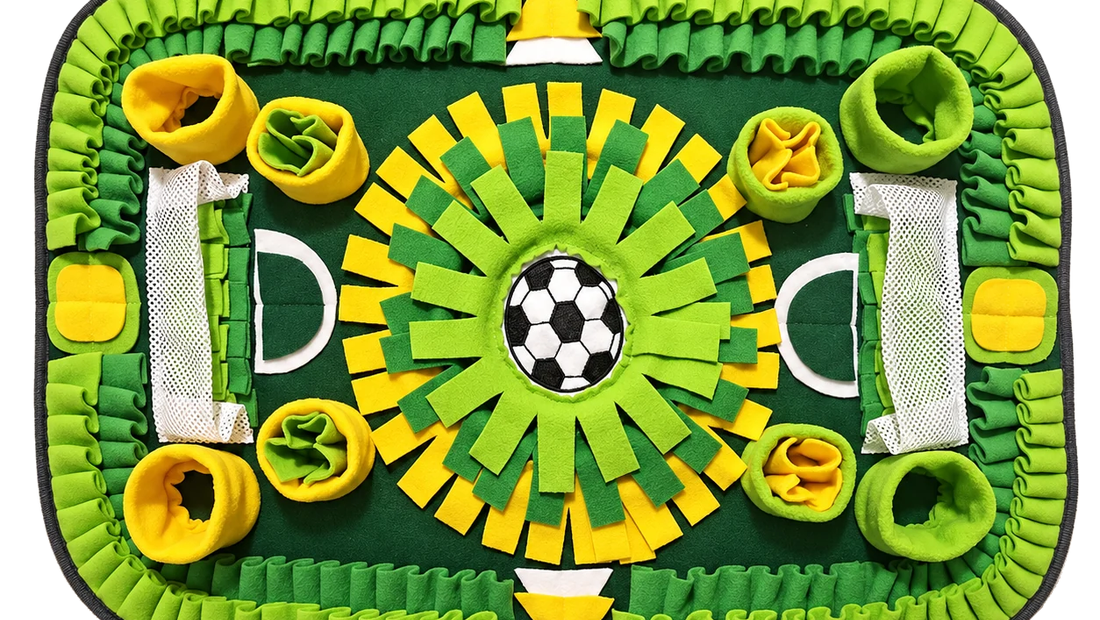
Football Snuffle Mat – 75 × 50 cm
Turn a small portion of dry food into a sniff-and-find activity. Felt folds and pockets across this football-themed mat give you places to hide kibble, encouraging your dog to explore at their own pace while you supervise.
- Felt folds and pockets for hiding food
- Green-and-yellow football design
- 75 × 50 cm mat
Check before choosing: Dog owners adding a supervised sniff-and-find activity with small pieces of dry food. It is not intended for unsupervised chewing.
Pack contents: 1 football-themed snuffle mat, approximately 75 × 50 cm.
Silicone Lick Mat & Rolling Feeder – Blue
Offer a small food activity with different textures to explore. This blue set pairs a textured silicone mat with a rolling centre feeder, making it a useful addition to supervised treat or wet-food time.
- Multiple textured feeding zones
- Rolling centre feeder
- Blue silicone mat with PP feeder parts
Check before choosing: Pet owners offering small amounts of pet-appropriate food during a supervised activity. Check that your pet can use the textures comfortably.
Pack contents: 1 blue silicone lick mat with rolling feeder assembly.
Rotating-Ball Slow Feeder – Light Blue
Add a little variety to a supervised wet-food session. This light blue feeder combines a rotating centre ball with a textured licking surface, giving cats and small to medium dogs different ways to explore a small portion of suitable food.
- Rotating ball and textured feeding surface
- Two suction cups on the base
- PP construction for wet-food portions
Check before choosing: Indoor cats and small to medium dogs using a small portion of suitable wet food under supervision.
Pack contents: 1 light blue rotating-ball pet feeder.
Browse the dog and cat feeding supplies collection to compare available options. Keep the product’s stated use separate from the broader advice in this guide; an accessory does not establish suitability for every pet.
FAQ
Can I leave the activity out while I am away?
These examples are intended for supervised food activities. Remove them if chewed and put them away after cleaning and drying.
Do these feeders treat anxiety or a medical feeding problem?
No such treatment claim is made. Discuss behavioural or medical concerns with an appropriate professional and use the accessory only for its stated role.