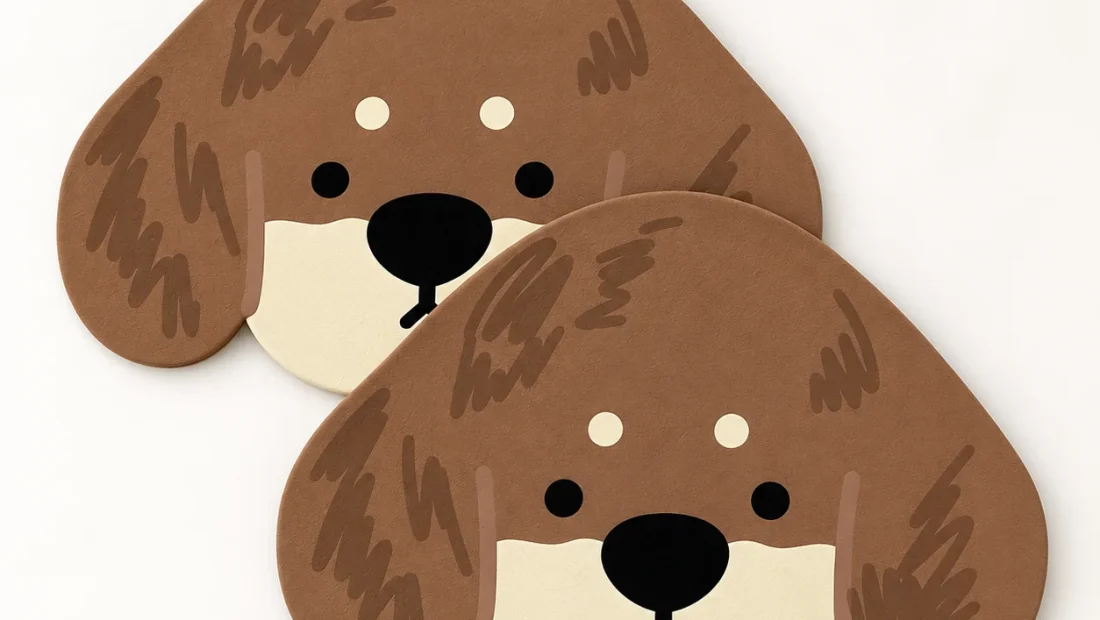
A compact feeding station works when the pet can use it comfortably and you can clean it without rearranging the room. Begin with those two requirements. Matching accessories may look tidy, but the practical details are the bowl footprint, the space around it, where food is stored and how used equipment moves through the cleaning routine.
Measure the clear area, not the corner
Include the space needed for your pet to approach and stand, not only the bowl itself. Check doors, drawers and walking routes so the station does not create an obstruction. If a mat is planned, compare its dimensions with the bowl arrangement and the available floor. A 50 × 60 cm mat can occupy a meaningful area in a small room. Marking that outline before buying helps you see whether it fits the real layout rather than the version imagined from a product photo.
Choose a simple bowl arrangement
Decide whether food and water use separate locations or one station according to your pet's needs and the household setup. Check the actual bowl size and avoid assuming capacity from diameter. A larger bowl is not automatically more convenient if it is awkward to lift or clean in your sink. Likewise, a very small travel bowl may not suit the home task you intend. Start with the required function and consider decorative style after the access and care questions are answered.
Keep storage useful and accessible
Place food according to its storage instructions, with label and batch information available. A container with a drawer requires enough clearance for the drawer to open fully. Do not force a storage item into a narrow gap that makes refilling or cleaning difficult. Consider where crumbs land during transfer to the bowl and how you will clean them. If a new container adds a complicated step without improving the routine, keeping an appropriate existing storage arrangement may be simpler.
Plan a route for used items
After a meal, bowls and mats need a clear path to cleaning and drying. Keep used items separate from ready-to-use equipment. If more than one person handles feeding, agree on where each belongs. The station should not rely on someone noticing an unlabelled damp mat tucked behind a cupboard. A small spare item can support rotation if there is room to maintain it, but accumulating multiple accessories without a drying place can make the area harder to manage.
Make the floor check part of the reset
Lift the mat and inspect the area beneath it rather than wiping only the visible edges. Follow the floor care instructions as well as those for the accessory. Remove food residue promptly and avoid leaving standing water under an absorbent mat. Let the surface dry before replacing items. A compact station is easier to reset when there are fewer unrelated objects around it. Keep leads, litter tools and outdoor clean-up equipment in their own places rather than using the feeding corner as general pet storage.
Reassess when the household changes
A growing pet, another animal or moved furniture can change how the station works. Watch ordinary use and adjust the layout rather than assuming the original measurements remain sufficient. If feeding behaviour changes in a concerning way, seek veterinary advice instead of treating it solely as a furniture problem. The examples below show a bowl, mat and storage option with different roles. They are a comparison of practical components, not a required matching set or a universal layout for every home.
Relevant PawNest products: specifications to compare
The following comparison uses the current product information, not hands-on test results or a ranking. Choose by the task, size and care requirements. A related accessory is useful only when its intended use fits your routine.
Puppy-Design Pet Feeding Mats – Brown, 2 Pack
Give bowls a defined spot and catch everyday drips around meals. These brown puppy-face mats add a playful touch to your feeding area, with two mats to use together or in separate rooms.
- Absorbent feeding mat surface
- Brown puppy-face design
- Two mats for flexible placement
Check before choosing: Dog and cat owners defining a bowl area and catching everyday drips. Each mat is approximately 50 × 60 cm; measure the space around your bowls.
Pack contents: 2 brown puppy-design feeding mats, approximately 50 × 60 cm each.
Non-Slip Stainless Steel Pet Bowl – Blue, 26 cm
Bring a simple, easy-to-reach bowl to your pet’s feeding spot. The polished stainless steel interior holds food or water, while the blue outer body and non-slip base ring make a practical everyday combination.
- Stainless steel food-contact surface
- Blue outer body with non-slip base
- 26 cm listed bowl size
Check before choosing: Dog and cat owners choosing a bowl for a level feeding space. Compare the listed 26 cm size with the available floor area.
Pack contents: 1 blue stainless steel pet bowl, listed size 26 cm.
Dry Pet Food Storage Container – Beige
Keep dry food in one tidy place with a clear view of what remains. This beige container has a narrow viewing window and a lower collection drawer, helping organise small dry food around your pet’s feeding area.
- Viewing window for checking contents
- Lower collection drawer
- Neutral beige finish
Check before choosing: Dog and cat owners organising small dry food near a feeding area. Check that your kibble passes freely through the opening.
Pack contents: 1 beige dry-food storage container. Capacity by weight depends on the food; a pet-food weight capacity is not confirmed.
Browse the dog and cat feeding supplies collection to compare available options. Keep the product’s stated use separate from the broader advice in this guide; an accessory does not establish suitability for every pet.
FAQ
Should all pet supplies be stored beside the bowls?
No. Keep food-contact items separate from litter and waste equipment. Store other supplies where their intended tasks happen without obstructing feeding access.
Is a two-pack of mats necessary?
Only if two mats serve a practical purpose, such as separate locations or a cleaning rotation. Check each mat’s footprint and your drying space first.