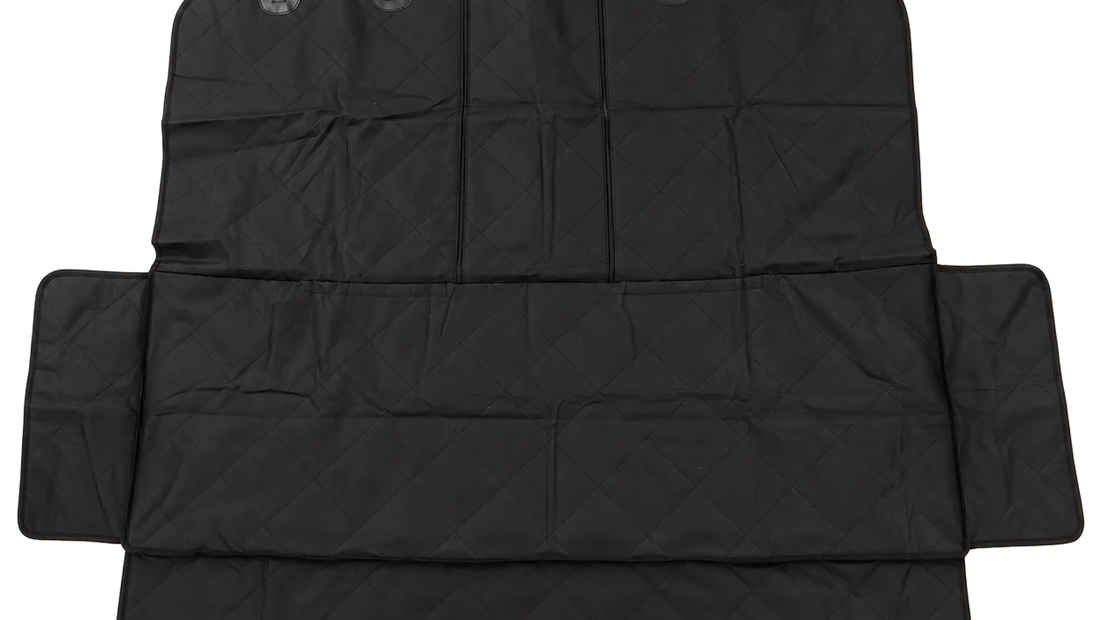
Measuring for a dog seat cover is about coverage and access at the same time. You want a practical layer over the surface without obstructing the vehicle's fittings or the separate restraint arrangement. Start with the actual space and the product's confirmed information. A universal-looking photo is not a substitute for checking your own car.
Identify which surface you want to cover
Decide whether the dog travels on the rear seat or in another appropriately arranged area. A seat cover and a boot liner are different shapes and should not be treated as interchangeable by default. List the areas that matter: seat base, backrest, side edges or boot sill. Then compare the product's described coverage. Buying a larger item without considering its shape can create loose material or awkward folds rather than solve the coverage problem.
Measure with the vehicle in its normal setup
Use the seat positions and fittings you expect during travel. Record the clear width and depth of the relevant area, and note contours that may affect how fabric sits. Do not include space already occupied by essential equipment as though it were available for unrestricted coverage. Take clear notes so you can ask a precise question if the listing lacks a dimension. Keep the units consistent when comparing your measurements with the product information.
Mark the fittings that must remain usable
Identify buckles, restraint attachment requirements, vents and any other essential fittings. Check how the proposed cover will sit around them. Do not cut, modify or improvise attachment arrangements based on a product photo. Follow the supplied instructions and resolve a mismatch before use. The straps on a cover position the fabric; they do not turn it into a restraint. Keep that distinction clear while planning where each part of the overall vehicle setup belongs.
Think about passenger changes
If the rear seat also carries passengers, consider how easily the cover can be removed, cleaned and refitted. Check where the folded item will go when it is dirty. Avoid storing it against clean water or feeding accessories. A quick fitting process is useful only if it remains secure and leaves the required fittings accessible. Try the routine with time available rather than discovering awkward straps just before someone needs the seat for an ordinary journey.
Inspect after fitting, not only before purchase
Once installed, check the material's position, straps and access points. Confirm that the cover does not interfere with other equipment as the seat is used in its intended configuration. Recheck according to the instructions after removing and refitting it. If the cover bunches or the shape does not work, stop and reassess the match. Do not rely on a label such as foldable or waterproof to answer a fitting problem; those descriptions refer to different product features.
Include clean-up in the decision
Remove loose dirt and follow the care label after use. Dry the cover before storage and inspect it for damage before the next trip. A towel can help manage damp coat or paws before re-entry, but it does not replace the cover's cleaning routine. The examples below distinguish rear-seat protection, boot coverage and a separate drying accessory. Use the comparison to select the right job and dimensions, not to assume every item belongs in every car.
Keep your measurement notes with the product information. If you change vehicles or rearrange seats, repeat the comparison; a cover that fitted the previous setup is not automatically suitable for the new one.
Relevant PawNest products: specifications to compare
The following comparison uses the current product information, not hands-on test results or a ranking. Choose by the task, size and care requirements. A related accessory is useful only when its intended use fits your routine.
Foldable Dog Car Seat Cover – Black
Keep everyday fur and muddy paw marks off your rear seat. This black cover folds away between trips and uses straps to hold it in place, making it a practical layer for journeys with your dog.
- Quilted seat coverage with side flaps
- Straps for securing the cover
- Folds away between trips
Check before choosing: Dog owners protecting a compatible rear seat during everyday journeys. Compare the cover and fitting points with your car before purchase.
Pack contents: 1 black foldable dog car seat cover.
Dog Car Boot Liner – Black with Orange Trim
Add a removable layer between muddy paws and your car boot. This lightweight liner covers the load area and extends over the sill, with orange edging that makes its outline easy to see when fitting.
- Boot-area coverage with sill flap
- Dark fabric with orange edging
- Straps for positioning
Check before choosing: Dog owners who want a removable layer in a compatible car boot. Compare the approximately 180 × 103 cm liner with your load area.
Pack contents: 1 dog car boot liner, approximately 180 × 103 cm.
Pet Drying Towel with Hand Pockets – 100 × 50 cm
Keep a drying towel handy for baths and damp walks. This microfibre towel includes hand pockets to help you hold it while patting your pet dry, with bound edges and a paw detail.
- Microfibre drying fabric
- Hand pockets for easier handling
- 100 × 50 cm towel
Check before choosing: Dog and cat owners who need a towel for baths or damp walks. Compare the 100 × 50 cm towel with your pet; larger coats may need more than one towel.
Pack contents: 1 grey pet drying towel with hand pockets, approximately 100 × 50 cm. The supplied imagery shows a blue-grey tone.
Browse the pet travel accessories collection to compare available options. Keep the product’s stated use separate from the broader advice in this guide; an accessory does not establish suitability for every pet.
FAQ
Can a boot liner be substituted for a seat cover?
Do not assume that. They have different intended coverage and fitting arrangements. Compare the specific product instructions with the area you want to protect.
Should I cover seat-belt buckles to keep them clean?
Keep essential fittings accessible and compatible with the separate restraint setup. Do not compromise their use for surface coverage.